

In the first round of the FIFA World Cup knockout stage, Japan’s Samurai Blue national team was defeated by Brazil 2-1 on June 29, bringing their tournament run to a heartbreaking end.
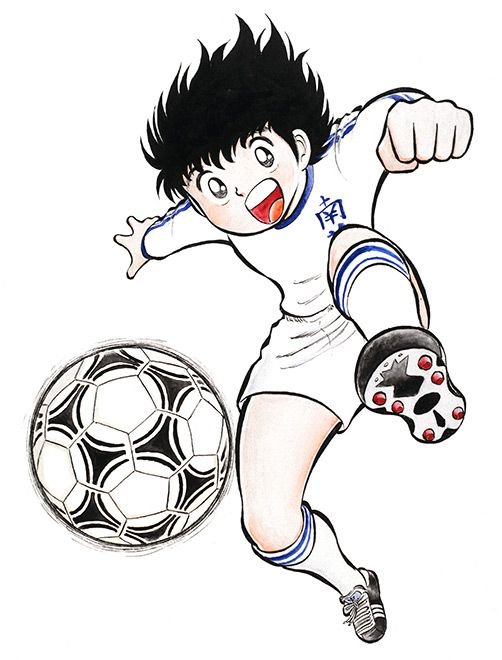
The match was a sensation on social media and in international media, as the high-stakes showdown evoked the plot in the globally beloved manga “Captain Tsubasa.”
First serialized in 1981, the story follows a genius soccer boy, Tsubasa Ozora, who hones his skills against rivals and eventually takes on the world, including the seemingly invincible champions, Brazil.
This was Japan’s first-ever knockout stage meeting with Brazil on soccer’s greatest stage, a stark contrast to the 4-1 group stage loss the Samurai Blue suffered against them during its 2006 World Cup debut.
The Asahi Shimbun interviewed “Captain Tsubasa” creator, Yoichi Takahashi, 65, for his perspective on the match.
Excerpts from the interview follow:
QUESTION: Japan suffered a narrow defeat against Brazil.
TAKAHASHI: I watched the match in real time. It was a truly frustrating game. I thought the real battle would begin after it became 1-1, but they got us right at the very end.
Compared to the Brazil match at the World Cup in Germany 20 years ago, which I saw in person, I could feel the progress that had been made. But at the same time, I was reminded of Brazil’s strength. It’s a clear reminder that we’re still missing what it takes to win in the knockout stage.
DREAM BECOMING REALITY
Q: “Captain Tsubasa” began in 1981. How far did you imagine Japanese soccer would go?
A: When I started the series 45 years ago, it was an era when Japan struggled to even qualify for the World Cup. And Brazil was truly strong, constantly leading world soccer and producing one superstar after another.
In the manga, I always depicted Brazil as the kingdom of soccer, with a core theme of Tsubasa growing under his ‘mentor,’ former Brazilian player Roberto Hongo, to one day defeating them.
I couldn’t have imagined back then that Japan would one day go toe to toe with that same Brazil.
In the last 45 years, Japan made its World Cup debut, qualifying became the norm, and reaching the knockout stage is now expected. The national team has built its fundamental strength, and I think this match was the result.
In the manga, I initially depicted “winning the World Cup as a lifelong, unattainable dream,” but I feel it is becoming a realistic goal.
Q: If Tsubasa Ozora had played, could Japan have won?
A: If Tsubasa were there, they might have won. In a one-on-one situation, I think Tsubasa would have scored the winning goal.
Q: The generation that read “Captain Tsubasa” now includes coaches.
A: Japan’s assistant coach, Hiroshi Nanami, 53, is one of them. He grew up reading “Captain Tsubasa” and has always been mindful of it.
For people of that generation, the image of “Brazil, the kingdom of soccer” is powerful, so for them to steer the game to a point where a Japanese victory wouldn’t have been a surprise is a wonderful achievement.
Dreams will continue as long as you don’t give up. I hope they use this as a milestone to take on a new challenge and, in four years, defeat Brazil in the World Cup final to win the championship.
LIFE INSPIRES ART
Q: You are serializing “Captain Tsubasa Rising Sun Finals,” where an Olympic final against Brazil is planned. Will this World Cup result influence it?
A: I am currently on a break to formulate ideas for the Brazil match in the manga, and this World Cup took place right in the middle of it. I felt it was destiny for Japan to face Brazil in real life.
Of course, I watched it knowing it would be a reference for the manga, so I believe the flow and plays of this match will influence what I draw.
As an author, my personal challenge is to draw the most compelling match in “Captain Tsubasa” history—one that I hope readers will agree is the best I’ve ever done.
Q: What are your hopes for the future of Japanese soccer?
A: Japanese soccer has developed at an incredible speed, more than I had imagined. I believe the broad base of support, with professional teams in almost every prefecture, is the foundation of Japanese soccer.
If soccer becomes a part of daily life, with clubs in every region and an environment where any child who wants to become a pro can practice, more young players will take on the challenge. I believe Japan’s strength will grow even further, and I hope for that to happen.
Original Source: This article was originally published on Asahi Sports. Click the link to view the full article.