

Brazil’s iconic No. 10 shirt endures as one of soccer’s defining emblems, admired the world over.
Pele (1940–2022), the only player to win the FIFA World Cup three times, carried that symbolism to every corner of the globe.
During his club’s tour of civil war-torn Nigeria in 1969, a 48-hour cease-fire was reportedly brokered so that both sides could watch the legendary forward play. The episode has since passed into lore as the moment soccer stopped a war.
In January 2023, rioters clad in Brazil’s yellow national team jerseys stormed the presidential palace and Congress in Brasilia. They were supporters of former President Jair Bolsonaro, a right-wing politician, who was frequently compared to U.S. President Donald Trump.
Thousands had gathered, refusing to accept his defeat in the October 2022 presidential election, which they insisted had been stolen.
Bolsonaro had spent years fashioning the national team shirt into a political emblem, recasting it as a badge of patriotism. Critics recoiled, arguing that the color yellow had been co-opted; many Brazilians, wary of being mistaken for his supporters, took to wearing the team’s blue away jersey instead.
In the weeks before the attack, attention had settled on Neymar, then Brazil’s No. 10. He publicly endorsed Bolsonaro’s re-election bid and, according to Brazilian media reports, pledged to dedicate his first goal at the Qatar World Cup to the president.
The tournament ran from Nov. 20 to Dec. 18, 2022. Some supporters confessed they could scarcely bring themselves to cheer for the national side.
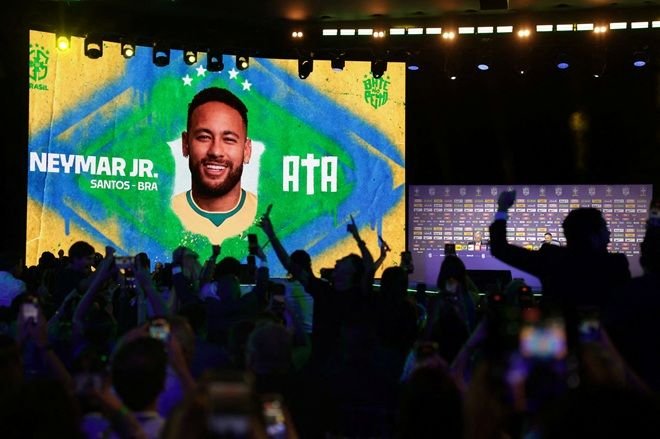
Three and a half years on from the events that transformed the storied yellow shirt into a symbol of political rupture, Neymar—now 34—has been named to Brazil’s squad for this year’s World Cup, to be co-hosted by the United States, Mexico and Canada.
His selection has, according to an acquaintance in Brazil, ignited fierce debate: the mercurial forward remains, as ever, never far from controversy.
The Brazilian Football Confederation condemned the attack at the time, insisting that the national team shirt is “a symbol of the joy of our people,” and urging that it be worn “to unite Brazilians and not divide them.”
The confederation is once again appealing for unity ahead of the global showpiece, set to kick off on June 11.
Brazilian politics remain bitterly polarized between left and right. What color, one wonders, will fill the streets of South America’s great soccer nation?
—The Asahi Shimbun, May 20
* * *
Vox Populi, Vox Dei is a popular daily column that takes up a wide range of topics, including culture, arts and social trends and developments. Written by veteran Asahi Shimbun writers, the column provides useful perspectives on and insights into contemporary Japan and its culture.
Original Source: This article was originally published on Asahi Sports. Click the link to view the full article.